The humble t-shirt is, by any reasonable measure, the most democratic garment ever invented. It costs almost nothing to produce, fits almost every body type, and requires zero styling knowledge. But over the past half-century, the printed tee has become something more — a canvas for identity, humour, politics, and increasingly, genuine design.
From Ramones tour shirts in the 1970s to Virgil Abloh's ironic quotation marks, the graphic tee has tracked cultural movements with a fidelity that runway fashion rarely achieves. It's immediate. It's disposable enough to take risks with. And when it works, it communicates something about the wearer in the three seconds before a conversation starts.
The Evolution of the Graphic Tee
Band merchandise was the beginning, but it wasn't the whole story. The 1980s brought slogan tees — Katharine Hamnett's oversized protest shirts became front-page news when she wore one to meet Margaret Thatcher. The 1990s gave us ironic graphics and the thrift-store aesthetic. The 2000s introduced streetwear collaborations that turned printed tees into collectible items worth hundreds.
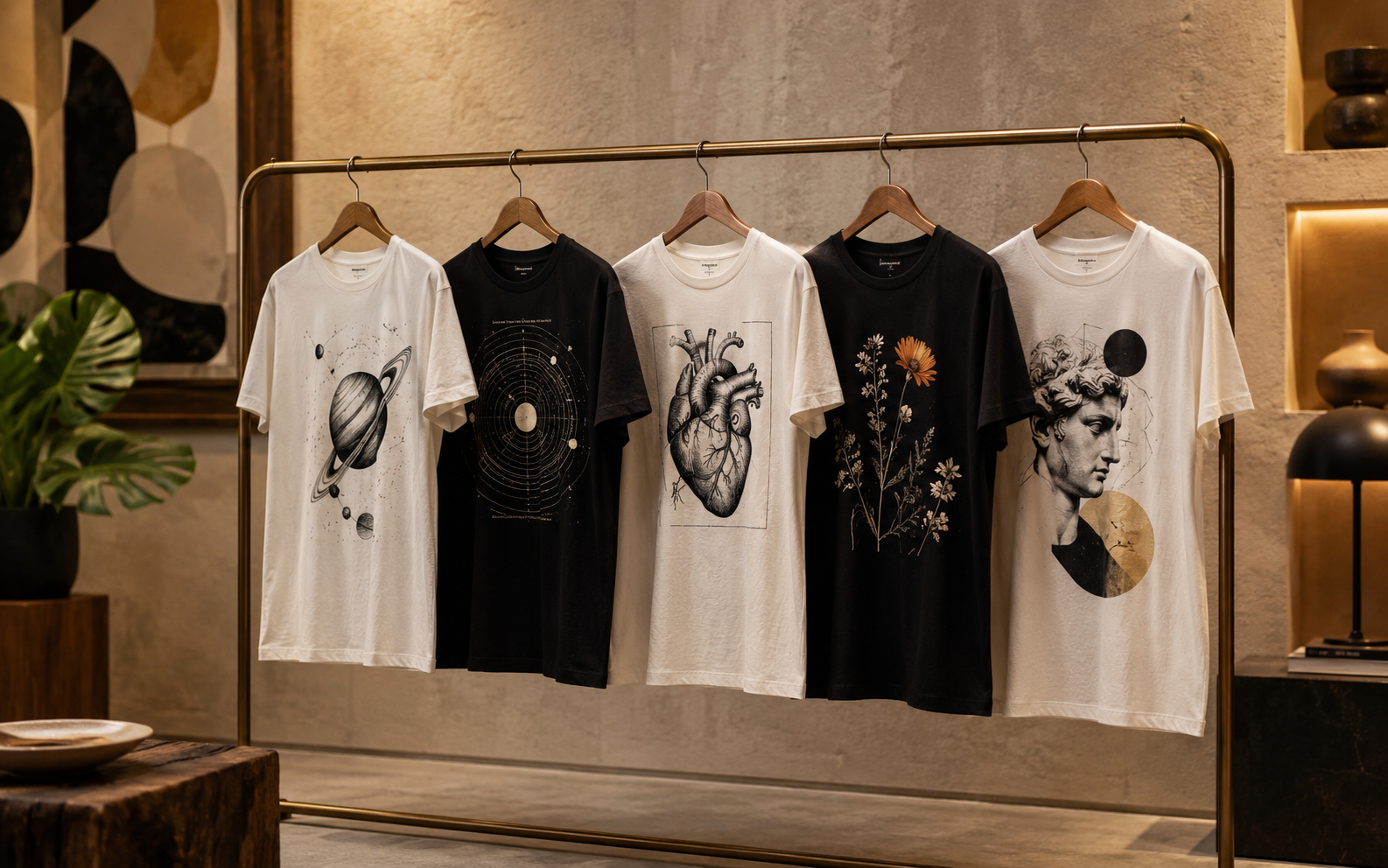
What's happening now is different again. The current generation of graphic tee designers treats the medium with the seriousness of printmakers. The illustrations are intricate. The references are specific — science, literature, niche subcultures. The printing techniques have improved dramatically, with water-based inks and discharge printing producing results that hold up wash after wash.
When Science Meets Style
One of the more interesting corners of the printed tee market is where academic and scientific themes intersect with design. There's a growing appetite for shirts that reference molecular structures, astronomical concepts, or mathematical patterns — worn not as costume but as quiet signals of interest and identity.
If you've ever wanted to wear your enthusiasm for physics or chemistry without it looking like a novelty item, this science shirt range is worth a look. The designs treat scientific subjects with genuine visual sophistication — the kind of thing you'd wear to a gallery opening and feel entirely comfortable in.
The Tee as Personal Archive
Open most people's wardrobes and you'll find a stack of tees that functions as a kind of autobiography. The festival you went to in 2019. The cafe you loved in Lisbon. The indie brand you discovered before anyone else. Each one carries a memory, a moment, a version of yourself.
This is what fast fashion misses entirely. A printed tee from a mass retailer has no story attached to it. A tee from a small-run designer, or one picked up at a specific event, becomes a garment with provenance. It's the difference between wearing something and wearing something that means something.
The Case for the Considered Tee
The best graphic tees today sit at the intersection of art, fashion, and personal expression. They're designed by illustrators and typographers who care about composition. They're printed on quality blanks that fit well and last. And they communicate something — subtly, confidently — about the person inside them.
In a world of algorithmic sameness, there's something appealingly direct about putting on a shirt that says exactly who you are. No hashtags required.