For the better part of two decades, synthetic fabrics dominated the clothing industry. Polyester became the world's most-produced fibre, turning up in everything from evening wear to athleisure. It was cheap, versatile, and wrinkle-resistant. But something has shifted. Quietly, persistently, natural fabrics are reclaiming ground — and the reasons go deeper than fashion trends.
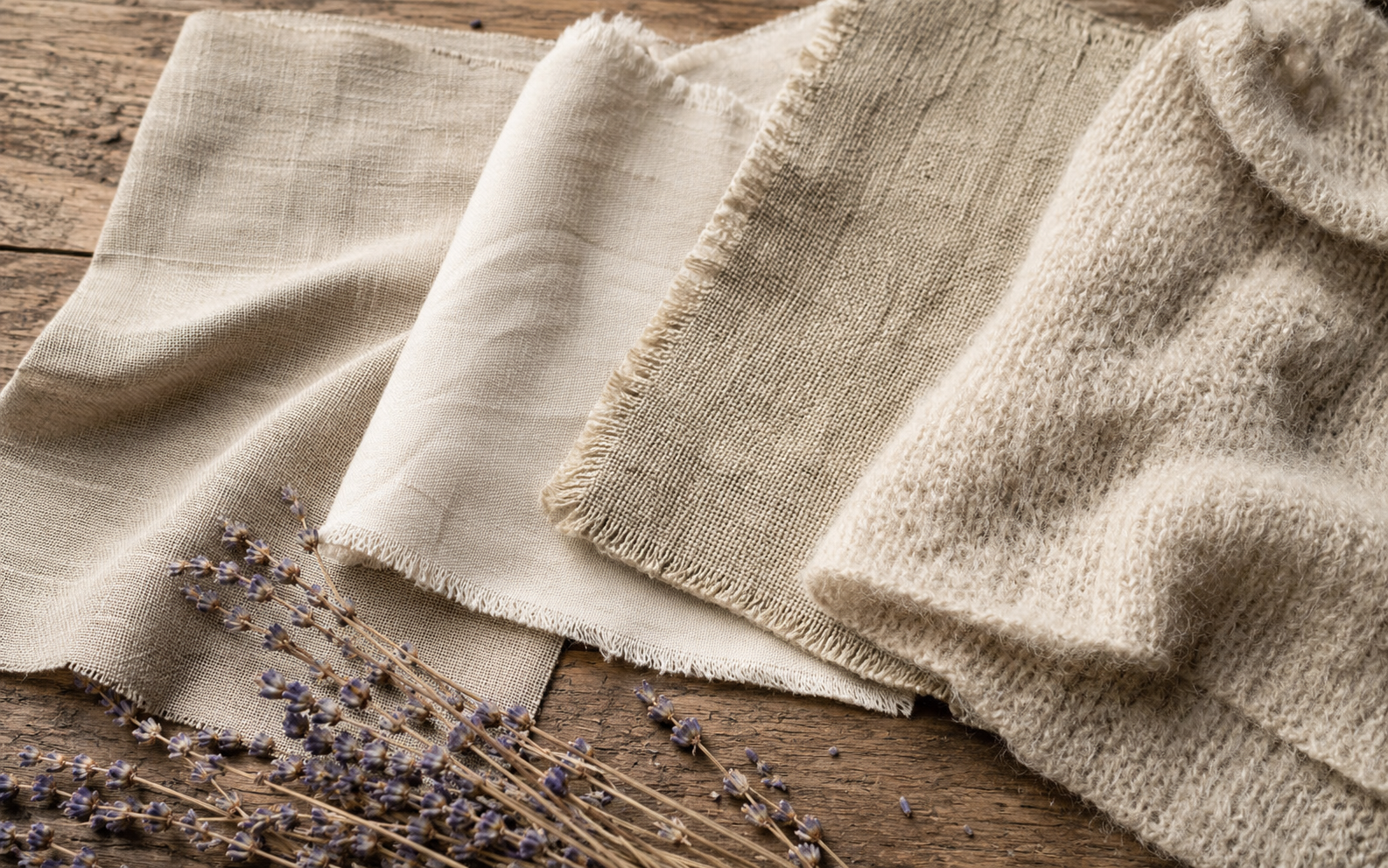
Walk into any thoughtfully curated boutique and you'll notice the change immediately. The racks are heavier. The textures are rougher, more varied. Linen shirts hang next to merino knits. Raw silk dresses share space with organic cotton separates. The fabrics feel different in your hands — less uniform, more alive.
The Comfort Argument
People who've worn linen through a Mediterranean summer rarely go back to polyester blends. Natural fibres breathe in ways that synthetics simply cannot replicate. Cotton wicks moisture. Wool regulates temperature. Linen actually gets softer with every wash, developing a drape and character that improves over years rather than degrading after months.
This isn't marketing — it's physics. Natural fibres have irregular structures that create air pockets, allowing ventilation that petroleum-based fabrics lack. Anyone who's worn a polyester shirt on a warm day knows the difference viscerally. The body knows what it wants, even when the price tag suggests otherwise.
The Environmental Reckoning
The sustainability argument for natural fabrics has become impossible to ignore. Every wash cycle sends microplastics from synthetic garments into waterways — an estimated 500,000 tonnes per year globally. These particles end up in marine life, in drinking water, and eventually in human tissue. The long-term health implications are still being studied, but the early findings aren't reassuring.
Natural fabrics aren't without environmental costs — cotton farming uses enormous amounts of water, and conventional wool production raises animal welfare questions. But the industry is adapting. Organic cotton certification has tripled since 2018. Regenerative wool farms are sequestering more carbon than they emit. These aren't perfect solutions, but they represent a direction of travel that synthetic production simply cannot match.
The Craft Revival
There's also a cultural dimension. The return to natural fabrics is part of a broader movement toward craft, provenance, and making things properly. Consumers — particularly younger ones — are asking where their clothes come from, who made them, and what they're made of. The answers matter more than they used to.
Brands like Patagonia, Alhambra, and Margaret Howell have built loyal followings not by chasing trends, but by committing to natural materials and transparent supply chains. Their customers pay more per garment and buy fewer of them. The wardrobes are smaller but better — each piece chosen with care and expected to last.
Dressing With Intention
The shift toward natural fabrics is really about something larger: a desire to be more deliberate about the things that touch our skin every day. Clothing is the most intimate product we own — we wear it for 16 hours at a stretch. The idea that we should care about its composition shouldn't feel radical, but in an era of disposable fashion, it almost does.
Start with one piece. A good linen shirt. A pair of wool trousers. Feel the difference. Notice how they age. The comeback isn't coming — it's already here, and it's being worn by people who've simply decided they deserve better.