The word "boutique" has been stretched so thin by the hospitality industry that it barely means anything anymore. Chains slap it on 200-room properties with lobby bars and loyalty programmes. But the real boutique hotel movement — the one happening in converted townhouses, rural farmsteads, and repurposed industrial buildings — is doing something genuinely different.
These are places with 8 to 30 rooms, owned by individuals with opinions about design, food, and how guests should feel when they walk through the door. They don't have brand guidelines. They have personality. And travellers are choosing them in growing numbers over the predictable comforts of the corporate alternative.
The Personal Touch at Scale
What separates a genuine boutique hotel from a small hotel with aspirations is intentionality. Every decision — the soap in the bathroom, the books on the shelf, the music at breakfast — has been made by someone who cares about the answer. There's no procurement department selecting from a catalogue. There's a person, often the owner, choosing things that feel right together.
This shows up in details that chain hotels can't replicate. The handwritten note recommending a neighbourhood restaurant. The vintage furniture that tells a story. The breakfast menu built around whatever the local market had that morning. As Monocle has long argued, the best hospitality feels less like a service and more like a very good host inviting you into their home.
Design as Experience
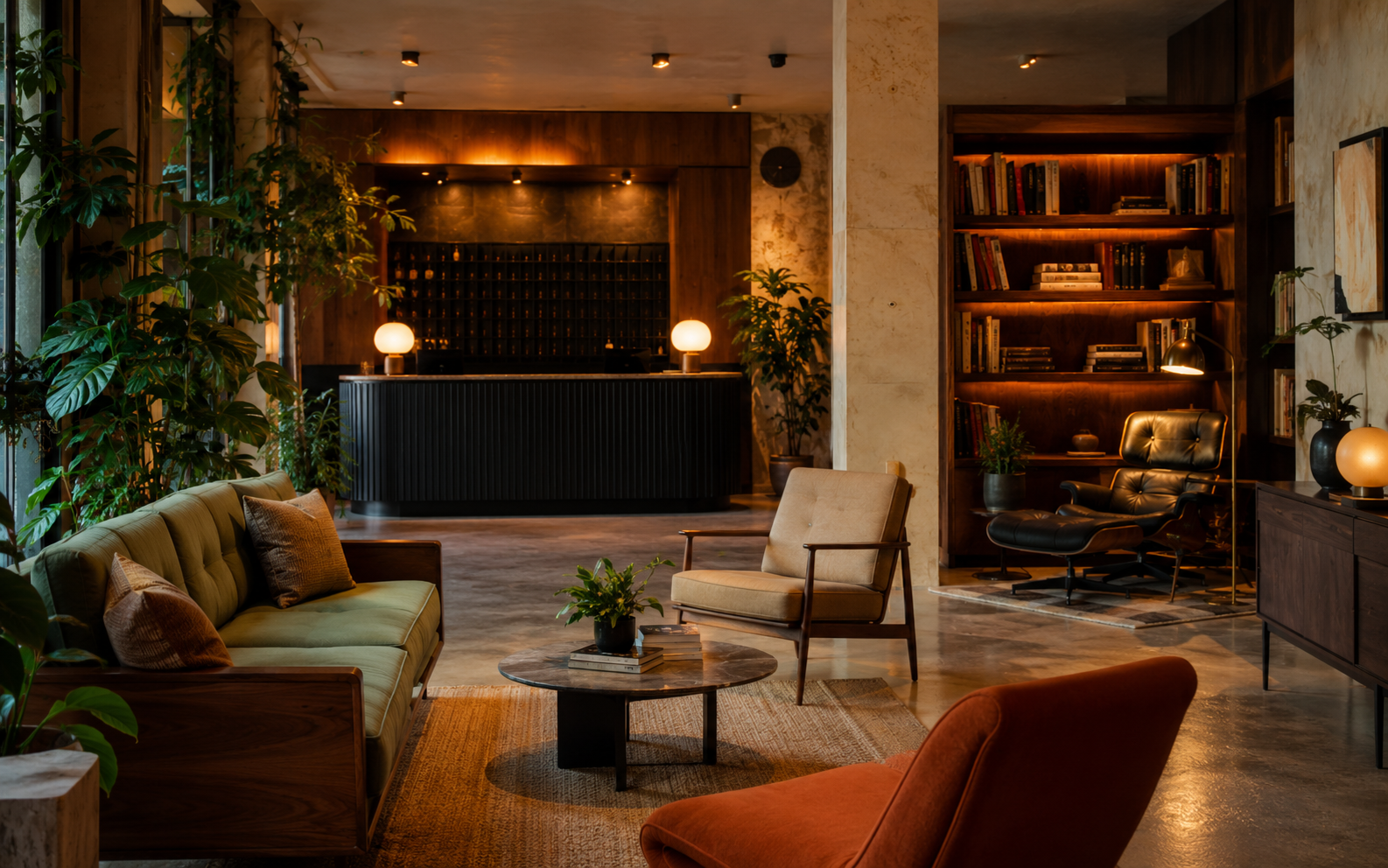
The boutique movement has raised expectations for hotel design in ways that benefit the entire industry. Properties like the Ace Hotel chain, Habitas, and countless independents have demonstrated that guests respond to spaces with character — rooms that feel curated rather than standardised, lobbies that function as genuine gathering places rather than transit zones.
The best examples use local materials and reference regional architecture without descending into theme-park pastiche. A boutique hotel in the Greek islands might feature limewashed walls and hand-thrown ceramics, but arranged with a contemporary eye that prevents it from feeling like a postcard. The result is spaces that photograph beautifully but, more importantly, feel genuinely good to inhabit.
The Economics of Small
Running a boutique hotel is, by most measures, harder than running a chain property. The margins are thinner. The staffing is more demanding — you need people who can think, not just follow procedures. And the owner-operator model means that holidays and sick days are complicated affairs.
Yet the model works because it commands a premium. Guests pay more per night for a boutique property because the experience justifies it. Repeat booking rates tend to be higher. And the word-of-mouth marketing — powered by guests who feel they've discovered something special — is more effective than any advertising budget.
Finding the Good Ones
The challenge for travellers is filtering signal from noise. Booking platforms list everything under "boutique," and the term has been so diluted that it's almost useless as a search criterion. The best approach is to look for owner-operated properties with fewer than 30 rooms, genuine design credibility, and a location that suggests someone chose this specific building for a reason.
When you find the right one, the experience stays with you. Not because the thread count was higher or the minibar was better stocked, but because someone cared enough to create a place that feels like somewhere — and that somewhere felt like it was made, at least in part, for you.