
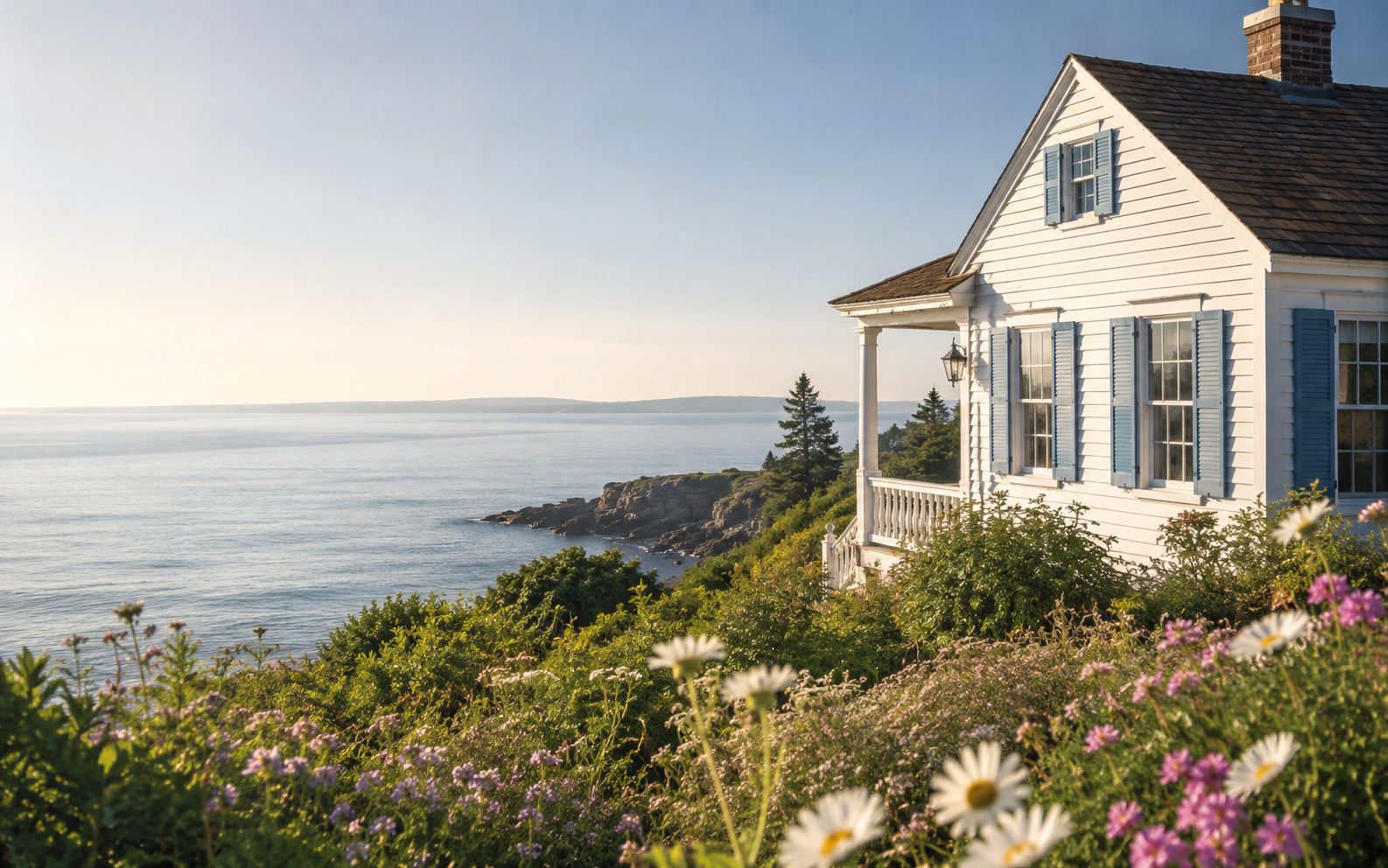
Ask anyone who's moved to the coast what changed, and they'll struggle to give you a single answer. It's not one thing. It's the accumulation of small things — the sound of waves at night, the quality of the light in the morning, the way time seems to stretch when there's an ocean at the end of the street. Coastal living rewires something fundamental in the daily experience of being alive.
Roughly 40 per cent of the world's population lives within 100 kilometres of a coastline. This isn't coincidence or convenience alone. There's something deeper at work — a pull that persists across cultures, climates, and centuries. Understanding it requires looking at biology, psychology, and the quieter dimensions of what makes a life feel well-lived.
The Science of Blue Space
Researchers have a term for it: "blue space." Studies from the University of Exeter's BlueHealth programme found that people living near the coast report higher levels of wellbeing than those living inland, even after controlling for income, age, and urban density. The effect is measurable, consistent, and not fully explained by exercise or outdoor time alone.
The National Ocean Service has documented how proximity to water affects everything from stress hormones to creative thinking. The ocean generates negative ions that may improve mood and cognitive function. The rhythmic sound of waves activates the parasympathetic nervous system — the body's rest-and-digest mode. Even looking at the colour blue has been shown to lower heart rate and blood pressure.
The Rhythm of Tidal Life
Beyond the measurable health effects, coastal living imposes a rhythm that inland life lacks. The tides dictate when you swim, when you walk, when the fishing boats come in. The weather is more present — you notice wind direction, cloud formations, the particular colour of the sea before a storm. These aren't inconveniences. They're connections to a natural world that most urban dwellers have lost entirely.
There's a simplicity to coastal routines that feels restorative. Morning coffee overlooking the water. An afternoon walk along the shore. Evening light that turns the whole horizon pink and gold. The days have a shape that isn't imposed by a calendar but by the environment itself.
The Communities That Form
Coastal towns tend to develop a particular social texture. They're small enough that you know your neighbours. The shared experience of weather — storms, sunsets, the first warm day of spring — creates common ground that cities rarely provide. There's a directness to coastal people that visitors notice immediately. Less performance, more substance.
This isn't to romanticise what can be challenging. Coastal economies are often precarious. Housing costs in desirable seaside towns have become prohibitive. And the reality of winter — when the tourists leave and the wind picks up — tests anyone's commitment to the lifestyle. The people who stay do so with eyes open, choosing the trade-offs deliberately.
Finding Your Coast
You don't need to relocate permanently to experience what coastal living offers. A week in a quiet seaside town — not a resort, but an actual community — can recalibrate your sense of what matters. Walk the harbour at dawn. Eat what the boats brought in. Let the sound of the sea replace the noise in your head.
The pull toward water isn't a trend or a lifestyle brand. It's something older and more essential — a recognition that human beings evolved alongside coastlines, and something in us still remembers.