
Something is happening in Cape Town that deserves more attention than it gets. Over the past decade, the city at the southern tip of Africa has quietly become one of the most exciting design destinations on the planet — not by imitating European or American trends, but by developing a visual language entirely its own.
Walk through the Woodstock neighbourhood on any given morning and you'll pass ceramicists, furniture makers, textile designers, and graphic studios all operating within a few blocks of each other. The rent is still low enough to experiment. The light is extraordinary. And the cultural mix — Malay, Xhosa, Afrikaans, European — produces a creative friction that shows up in everything from restaurant interiors to street murals.
The Woodstock Effect
Woodstock has become Cape Town's creative nerve centre, though the energy is spreading fast. The Old Biscuit Mill, once an industrial relic, now houses design studios, artisan food vendors, and a Saturday market that draws thousands. But it's the quieter studios — the ones tucked behind loading docks and down unmarked corridors — where the most interesting work happens.
Designers like Haldane Martin and Dokter and Misses have built international reputations working from these spaces. Their furniture blends African craft traditions with contemporary minimalism in ways that feel neither nostalgic nor derivative. The pieces travel well — you'll find them in galleries in Milan, London, and New York — but they couldn't have been conceived anywhere else.
Fashion Beyond the Runway
Cape Town's fashion scene has followed a similar trajectory. Brands like Maxhosa Africa, which translates Xhosa beadwork patterns into knitwear, and Lukhanyo Mdingi, whose slow-fashion approach has caught the eye of LVMH, are producing garments that feel both deeply local and globally relevant.
What's striking is the lack of pretension. Cape Town designers tend to talk about materials and process rather than concepts and manifestos. There's a directness to the work — a willingness to let craft speak for itself — that feels refreshing in an industry addicted to narrative.
Architecture and Interior Design
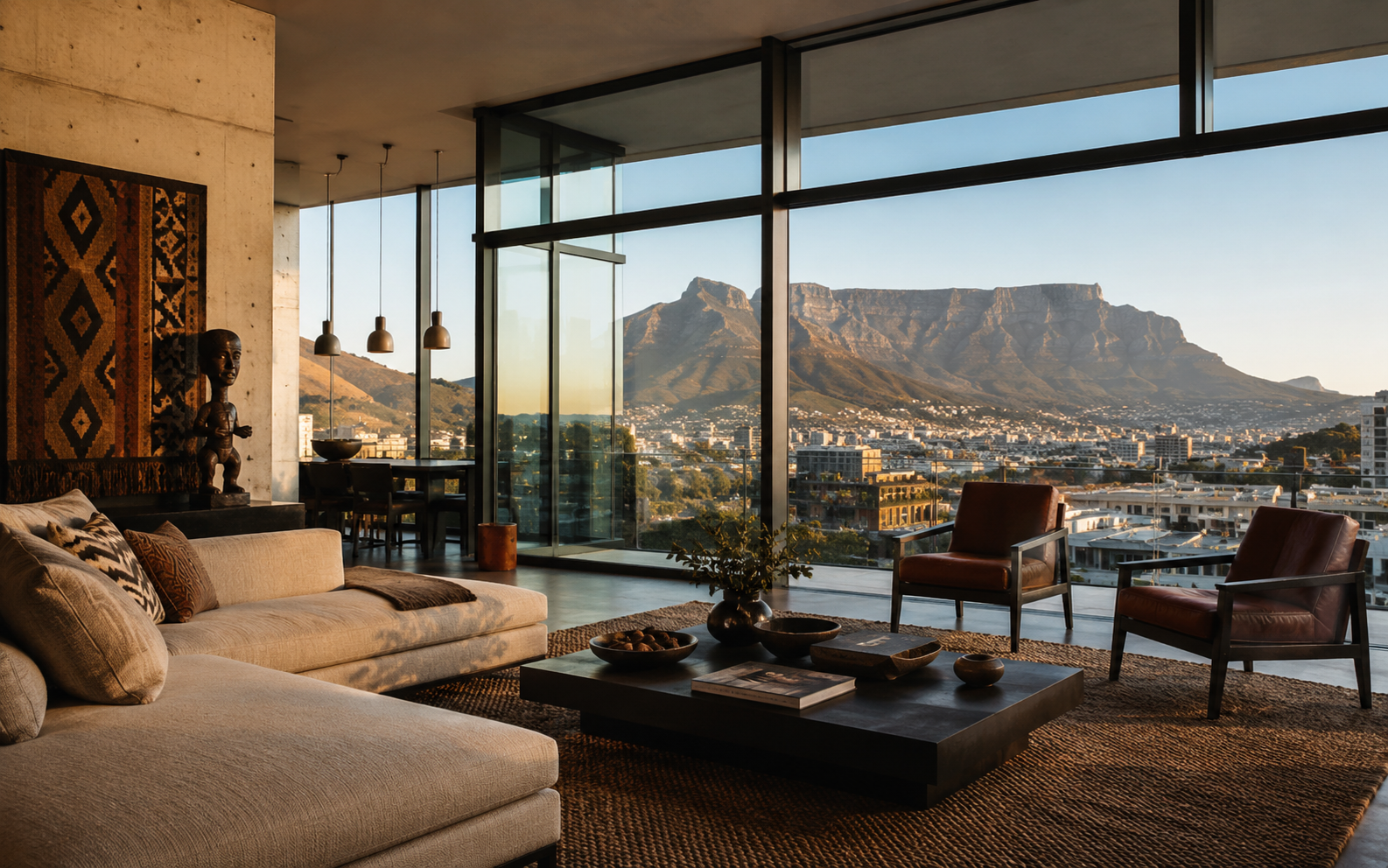
The built environment in Cape Town tells its own story. Firms like SAOTA and Greg Wright Architects have gained recognition for houses that respond to the landscape rather than imposing on it — glass walls that frame Table Mountain, courtyards that channel the southeast wind, rooflines that echo the surrounding geology.
Interior design has followed suit. The city's best restaurants and hotels feature a restrained palette of raw concrete, indigenous wood, and locally woven textiles. It's a look that photographs beautifully but also feels genuinely comfortable — warm rather than severe, lived-in rather than curated for the camera.
What's Driving It
Several factors converge to explain Cape Town's creative surge. The cost of living, while rising, remains far below comparable cities. The time zone sits conveniently between Europe and Asia. The natural environment — ocean, mountain, wine country within 45 minutes — attracts talent and keeps it. And the city's complicated history gives its creative class a depth of subject matter that purely comfortable places can't match.
For visitors interested in design, Cape Town rewards curiosity. Skip the tourist buses. Walk the backstreets. Step into the studios that leave their doors open. The renaissance isn't happening in galleries — it's happening in workshops, and it's happening right now.